Monday, March 15, 2010

Tea Bag Exploration

Today, with the materials we had bought together on Saturday, we tried to explore different shapes and sizes using the tea bag idea.

Saturday, March 13, 2010

Shopping for Materials

So we got together this weekend to discuss what our product is going to look like and how we are going to achieve it. The idea is still a ball, but we needed the right materials, biodegradable, natural materials that could be shaped spherically. We pretty much had a good idea in our heads.

Last night however, Lorenzo came up with a brand new idea that threw us off guard. A tea bag. A bomb. A tin can. A plastic water blister. He offered to come in on Saturday to our group meeting and show us some products he was thinking of that he though were relevant to our project:


We understand what Lorenzo was trying to get at, but why does it have to be so "industrial?" Fabric, metals, plastics, textiles. Why does it have to be so wasteful?

Why tried our best to take his advice into consideration when shopping for the right materials. In the end, we bought some tulle, sheet moss, and artificial yellow flowers.

Sunday, March 7, 2010

Fence Art


Wednesday, March 3, 2010

Final Video!

Here is our final video for the second phase of our project.

The Urban Fence Farm

Our group has gone through another change in direction. We are now looking at fences in the urban environment. We are giving the behaviour of planting crops in the spring to turn the typical urban dweller into an urban farmer.

These are a few images showing how plants can interact and grow around a man made object such as a fence.


Roll n' Grow

This product is already on the market. It is a great way of easily growing lots of flowers without much effort, just water. We will be using it for the outer layer in our product, allowing us to grow many colourful flowers in a short period of time.


This is a diagram showing the layers that will make up our product.

From diagram - ball

Tuesday, February 9, 2010

Phase II

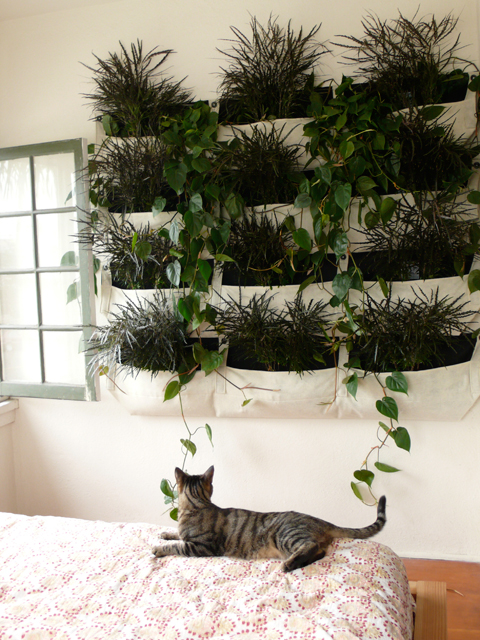
Our next step of this project is to create a "Dirty Prototype." Choosing a specific action from our observations in our last phase, we are to design a product. I think, after speaking with the rest of the group we are moving towards the action of harvesting and how it can be incorporated into the home environment. The idea is to create a forest WITHIN the urban home that would allow individuals to harvest herbs and such for their own purposes.


Some ideas and current products that already exist are shown below.


Thursday, February 4, 2010

Final Video!

My first video ever created!
A submission for Lorenzo Imbesi IDES 4302.


Diagram No. 1
This diagram shows tasks that are performed by typical agriculturalists (left) and those performed by our "Urban Farmer" (right). In the middle are the general actions that are shared between the two sets of people. The bar graphs at the bottom show the distribution of tasks, divided into the general action categories.
From URBAN FOREST - JAN 28


Diagram No. 2
This diagram shows a day in the life of 5 different types of farmers. The white line in the center represents time (morning on the left and night on the right). The coloured dots on the lines represent events that happen in the daily life of the individual. The vertical placement of the dots represents how much the person enjoys this event (high events are very fun, low ones are boring or tedious).
From URBAN FOREST - JAN 28

Wednesday, February 3, 2010

Brewer Park Photos

These are some pictures Mark took at the ice rink in Brewer Park.

Farmer Songs

Found some Farmer songs that could or could not be used in our video lol.


Saturday, January 30, 2010

Some more photos and videos of "urban farmers": Workers on machines, at work.

This video was taken on the front steps of the Carleton Technology & Training Centre.


And this video here was taken just behind the Mackenzie building on campus

Thursday, January 28, 2010

Video Problems!

So today, while trying to edit some of the footage we have, we encountered a huge problem. Our videos do not work in Windows Movie Maker and therefore cannot be edited. We contacted Ryan Kuhne, the person responsible for solving our technical/videos issues for this course and he provided us with a few solutions. We downloaded a video converter here and was able to convert our videos from .VOB and .MOV files to .AVI files, which are supported by Windows Movie Maker. Success!

Interview on Jan 28, 2010 with Edward Bruggink

1.Day in the life

8:30AM – Opening building:

- Doors, lights, elevator , golf carts

- Gathers plants for 830 & 130 labs (biology department)

- Visit labs – when tasks are done and satisfied

- After labs are done, goes back to office to check emails, phone calls and troubleshooting with problems in building

- Then, waters plants for an hour

- Rest of day – make sure building is running okay and plants are watered

- Lock doors and closes down building.

4:30PM leaves for the day

- Has students working on weekend.

2. Favourite Task (five ways)

Watering and watching plants grow in green house.

- Enjoys watching plants grow, blossom and mature.

- Watching full range.

- People appreciate the hard work

Ie. Everyone loves butterfly show. Enjoys the hard work he puts, because of the response of others (Proud, joy and respect)

Enjoys taking care of the building problems

- Getting the right technicians and support to fix problems

- Solve problems quickly

-Faculty members are happy with results

-Happy with him

Worst tasks

Budgeting

- Restricting

- Has to reuse things (tools and equipment)

-Frustrating

3.Character Profile

Edward Bruggink

- Has family

- 28 years of experience

- Diploma from U of Guleph

- Proud of what his job and contribution to the community and environment (butterfly show, pumpkin contest, news broadcast, helping lee valley tools, Carleton student making a film in the green house, willingness to help students)

- Loves the outdoors and nature. SAD that bird flew into window and had to chase the bird out.

Interest/activities

- Fishing, camping and painting. Paints portraits as gifts for family and friends.

Likes

Bio-control

- More work involved, but more rewarding (better, safer, less harmful to environment)

Dislikes

Battling insects because its easy for them to grow and take over

3. Personal inventory

- Shredder for making soil

- Seeders

- Hose

- Shovel

- Planting tools

- Pruner – favourite tool – “that’s my baby” carries it with him at work and at home, has holster where he stores it at his waist, story about how he forgot to bring it on the weekend and couldn’t cut the branches to help the kids(maybe students)

Problems

Pest Control

- Pesticide not allowed any more since 1993 for greenhouse.

- Uses Bio-control

-Uses lady bugs to eat smaller insects

-Better than chemicals (safe fruits, safe to touch plants, no chemical suit)

-Chemical suit gets very hot and sweaty (15 yrs of experience)

Maintaining heat

- Shade on side of glasses

- Positions windows to allow for maximum sunlight and heat (sun rising from east to west, trying to be efficient)

- Raining and wind pulls heat out of greenhouse

- Summer – screens allow exclusive heat to escape

-If too hot, windows open automatically

Maintaining Plants

- Hire students on the weekend to take care of plants

Images taken of equipment used by "Urban Farmers"

Monday, January 25, 2010

Body-Storming

Today, Christine went capture some video footage using the BODY-STORMING method: setting up a scenario, acting out a role, and focusing on the specific behaviour of the urban farmer concept through physical enactment.

Christine:
I brought with me a basil plant, a bag of maintenance salt to the house of the person in which I was videotaping. I told him what I was going to do, set up my camera and scenario and asked him to do certain tasks while I film.
Tasks:
- Water his plants,
- Harvest his plants
- Use his harvested crop for cooking
- Feed his cat
- Clean up after his cat
- Shovel the driveway
- Salt the walkway

Here is the raw footage:

Saturday, January 23, 2010

IDEO Research Methods

I may have not found the exact IDEO Methods Cards but I have found a full list of the methods here. These are such a great tool. I've asked Diane to look into purchasing a set of cards for the school.

Thursday, January 21, 2010

Research References

Tou Yia was sent to the library to find some books on farming for our own benefit of learning more indepth about the subject.

Books:
- A City of Farmers by Donald B. Freeman


- Farms and Farmers in an Urban Age by Edward Higbee


Links:
topics: timeline of machinery & life on farm
http://inventors.about.com/library/inventors/blfarm1.htm

http://site.ebrary.com.proxy.library.carleton.ca/lib/oculcarleton/docDetail.action?docID=10132385
Today, the three of us have divided our work and person has a responsibility. Mark is currently working on developing a diagram of farming actions and behaviours, Tou Yia is at the library searching for information on urban farming, traditional farming and its processes and Christine is looking up contact information, making phone calls for interviews and visits.

Mark's work for the day:
Tou Yia's work for the day:
Christine's work for they day:
National Capital Commission Farm Produce Pamphlet

Group Work:
As a group we discussed the methodology and information we would like to gather from farmers. With the farming contacts that Christine will find, we will document the farmer's character profile, a day in his/her life, document their actions and ask for a narration. Along with personal interviews, I suspect we will develop an online survey to distribute to farmer's blogs.

What was found today was that the farming community (CSA: Community-Shared Agriculture) keeps an online farming blog. Direct contact to farmers around North America is available.

Wednesday, January 20, 2010

So today, Mark, Tou Yia and I met to brainstorm some ideas and get our 'Urban Forest' project going. The plan was to list who and what to observe, how we are going to observe them and with what medium.


WhereObserveMethodDocumentation
Carleton GreehouseEd Bruggink fertilizing plants
Video
Photo
Survey
Agriculture MuseumFarmers tending to farm animals
"
Dog ParkPeople tending to pets
"
Christine's HouseHer mom's indoor garden
"
Rohan's HouseCare for his greenhouse
"
City StreetsSnowplow plowing streets
City salt dispensing

Video
Photo


*Note: Table still under construction

We also went on a small field trip to check out the Carleton Greenhouse. Fortunately we ran into the greenhouse manager Ed Bruggink who maintains the greenhouses. We asked some questions, to learn more about what he does and asked him to fertilize the plants while we video and photograph him.


Contacts for what we found today are listed below:

Ed Bruggink - edward_bruggink@carleton.ca
613-520-3513
211 Nesbitt Building, Carleton University

Veggie Trail Farms - (613) 723-9222‎
Woodroffe Avenue, Ottawa

Canada Agriculture Museum - agriculture@technomuses.ca
613-991-3044
Prince of Wales Dr, Ottawa, ON K1G 5A3